Do saltwater pools need a special robotic cleaner?
The short answer. Almost certainly not. A saltwater pool is far less salty than most people picture, and modern robotic cleaners state salinity ratings that clear it comfortably. There is one specification worth checking before you buy, and it is not the word saltwater on the box.
How salty a saltwater pool actually is
This is the number the whole question turns on, and hardly any page selling saltwater cleaners states it. Orenda Technologies, who work in pool water chemistry, put the optimal range for a pool running a salt chlorine generator at about 3,000 to 3,800 parts per million. Generators generally stop working below roughly 2,700, and their upper limit sits near 4,500.
| The reading | Parts per million | Whose figure |
|---|---|---|
| Where a salt chlorine generator generally stops working | Around 2,700 | Orenda Technologies |
| The optimal range for a pool running one | About 3,000 to 3,800 | Orenda Technologies |
| Where a generator's upper limit sits | Near 4,500 | Orenda Technologies |
| What the AquaSense 2 Ultra is stated to handle | Up to 5,000 | Beatbot, about its own machine. Their published figure, not a measurement of ours |
So a saltwater pool lives inside a narrow band, and it is a mild one. That is the reason you cannot taste the salt when you swim in one.
Parts per million is a concentration, so holding your pool inside that band means knowing how much water is in it: the same quantity of salt reads very differently in 10,000 gallons than in 25,000. Work your volume out once and write it down.
It is the number every dosing instruction on the bag assumes you already have, and it is the one number here that has nothing to do with which machine you buy.
Which makes the specification easy to check
Manufacturers state a maximum salinity for machines intended to work in these pools. Beatbot says the AquaSense 2 Ultra handles up to 5,000 parts per million, which is their published figure rather than something we have measured. Set that against the numbers above and the point becomes obvious: a rating of 5,000 covers the entire operating range of a residential salt generator, including the top of it.
That is the whole test. Find the maker's stated salinity rating, check it against what your own generator runs at, and make sure there is headroom. A machine that clears your salt level is suitable whether or not the marketing uses the word saltwater.
⭐ And here is the part that proves the point. Beatbot markets the Ultra as its saltwater model, but the far cheaper AquaSense 2 states the same 5,000 parts per million on its own product page. Same rating, a fraction of the price.
Whatever else separates those two machines, salinity is not it, so do not let a salt pool push you up a range. Our review of the cheaper model covers what actually does separate them, including the terms we think matter more than any specification.
What we are not telling you
We have not verified a salinity rating for Maytronics, Aiper, WYBOT or Polaris machines, so this page quotes none for them. That is not a judgement on those brands. It means we have read one manufacturer's published figure and not the others, and we would rather leave the gap visible than fill it with a number that sounds right.
If you are considering a machine from any of them, the rating will be in its specification sheet, and the question to ask a seller is simple: what salinity is this rated to. A seller who cannot answer it is a seller who has not read the spec either.
The one machine we can point at
This is a short list because it is limited to what we have actually read. For the wider range and the price bands, the main comparison covers every model, and the cordless page covers the battery question that matters more for most buyers than salinity does.
Affiliate links. We may earn a commission through MaxBounty if you buy, at no extra cost to you, and it never decides a ranking or a verdict. Full disclosure.
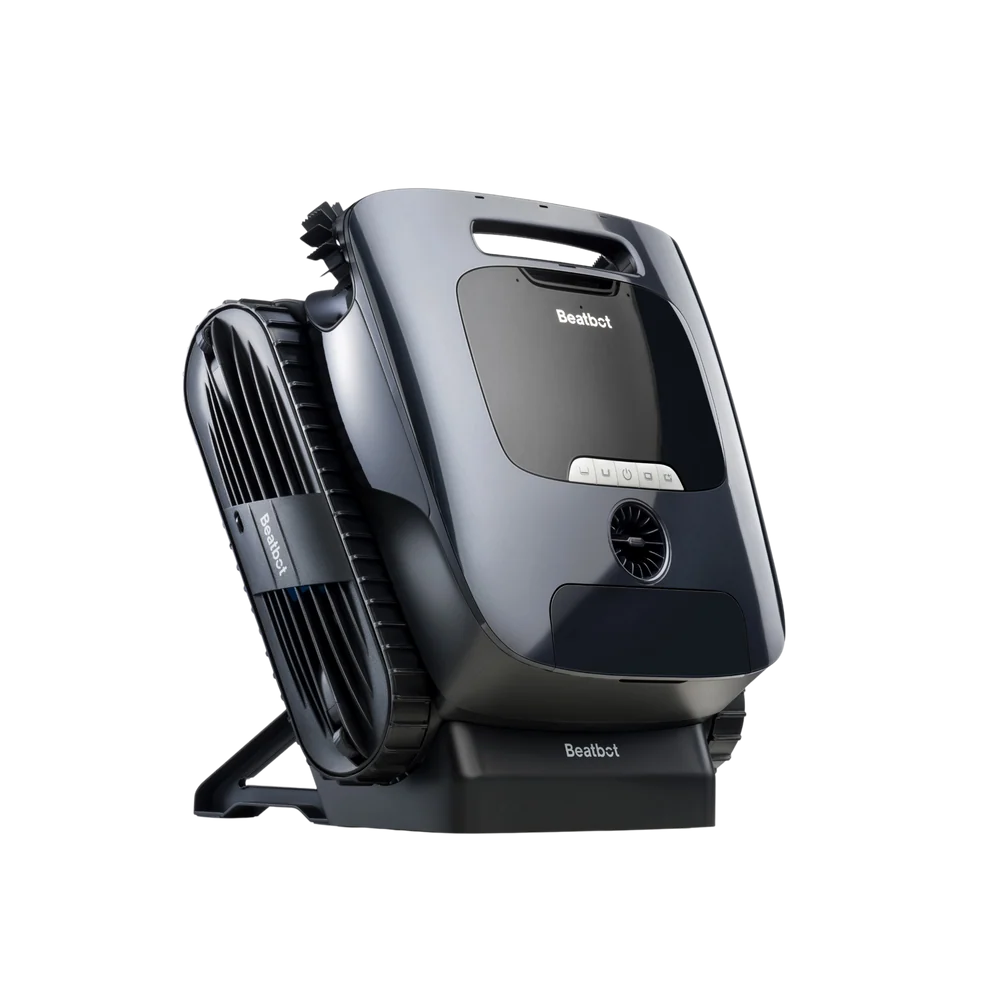
Stated rating clears a salt pool: Beatbot AquaSense 2 Ultra
Cordless, five-in-one cleaning with AI camera mapping, rated by Beatbot to 5,000 parts per million salinity, in stock with no pre-order notice
$2,299.00 Prices verified September 24, 2026. Confirm the current price on the retailer page before buying.
Check price at BeatbotIf you have been told a salt pool narrows your options, this is the model whose published salinity rating settles the question outright: 5,000 parts per million covers the full operating range of a residential generator. Read that as permission rather than as a recommendation. It is also the model in the range aimed at larger pools, so the headroom costs nothing in endurance.
Keep in mind: It is considerably more machine than a small saltwater pool needs, and salinity alone is a poor reason to buy up a range. The 5,000 parts per million figure is Beatbot's published claim rather than a measurement of ours.
Best for: A large saltwater pool, where the size of the pool is the reason to buy this and the salt is merely not an obstacle.
Full specification
| Salinity rating (maker figure) | Up to 5,000 parts per million, published in Beatbot's own article. This is their claim, not a measurement of ours |
|---|---|
| Cleaning coverage | Five-in-one, including the water surface via side brushes |
| Power | Cordless |
| Navigation | HybridSense pool mapping with an AI camera |
| Availability | In stock. No pre-order notice on the product page |
What actually changes with a saltwater pool
Not the cleaning. What changes is the chemistry and the hardware around it: a generator makes the chlorine, so the chemical bill drops, but the salt cell needs cleaning every few months and replacing eventually. Our cost breakdown covers what that does to the yearly total, including the figures for saltwater specifically.
If you are choosing a cleaner, that page is more useful to you than any saltwater cleaner ranking, this one included.
Frequently asked questions
Do saltwater pools need a special robotic pool cleaner?
Usually not. A saltwater pool is far less salty than people assume, and most modern robotic cleaners state a salinity rating comfortably above the level a pool actually runs at. What matters is checking that stated rating against your own salt level, not buying a product marketed as a saltwater model.
How salty is a saltwater pool?
Orenda Technologies, who work in pool water chemistry, put the optimal range at about 3,000 to 3,800 parts per million, with salt chlorine generators generally bottoming out near 2,700 and topping out near 4,500. That is a narrow band, and it is a small fraction of seawater.
Will salt water damage a robotic pool cleaner?
Salt is harder on metal parts than fresh water is, which is why makers state a maximum salinity and why the ones designed for it use coated or corrosion resistant components. Running a machine inside its stated rating is the whole of the protection you need. Running one outside its rating is where the damage argument becomes real.
What salinity rating should I look for?
One above the level your own generator runs at, with some headroom. Since generators generally operate below about 4,500 parts per million, a cleaner rated to 5,000 covers the full operating range of a residential system. Beatbot states 5,000 for the AquaSense 2 Ultra, which is their figure rather than one we have measured.
Does a saltwater pool cost more to maintain?
Less on chemicals and more on hardware. The chemistry bill drops because the generator makes chlorine from the salt, but the salt cell needs regular cleaning and eventually replacing, so part of the saving is a deferred cost rather than a saving.