Slope mowers

By the BackyardRated Editorial Team
Published July 29, 2026 and updated August 28, 2026

The short answer. A slope mower is a mower built for ground you should not sit on. OSHA's guidance for riding mowers is to avoid slopes over 15 degrees when nothing better is available, which is roughly a 27 percent grade, and that threshold is lower than most banks and ditch sides people mow anyway.

Three classes of machine answer it: remote control mowers you drive from level ground, walk behind brush mowers you push from above, and tracked machines. This site covers the remote control class, where the models we can point you at are rated by their manufacturer from 45 percent up to 119 percent grade.

Before comparing any of those numbers, check which scale you are reading: 119 percent grade is 50 degrees, not 119 of anything you can picture.
Affiliate links. We may earn a commission through MaxBounty if you buy, at no extra cost to you, and it never decides a ranking or a verdict. Full disclosure.

Our picks at a glance

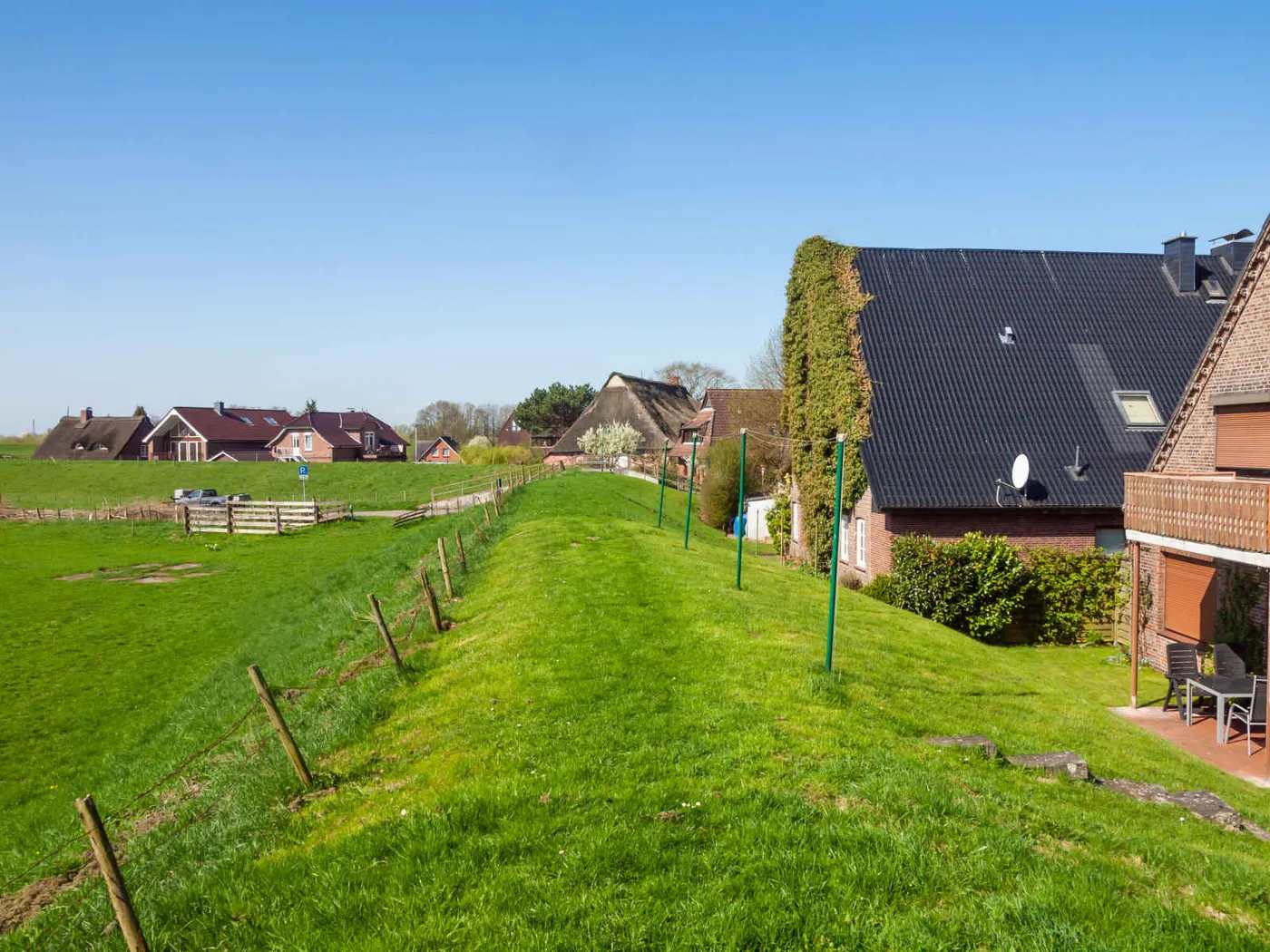
A long grassed embankment running between a fenced field and a row of houses, its side steep enough that the slope meets a garden fence part way down
The ground this whole department exists for. A bank like this is nobody's lawn feature: it is grass that has to be cut, on a face steep enough that a fence runs across it, with a house at the bottom of the fall line. Walking a mower along it is the default answer and the one the guidance above argues against.

The three classes, and what each one is actually for

Class What it is for Can we point you at one?
Remote control mowers Taking your own body off the bank, with enough torque and deck to go through growth a lawn machine would stall in Yes. This is the class we cover, and the only one we can send you to
Walk behind and self propelled brush mowers Ground that is rough but still walkable, at about a third of the budget, with the operator uphill of the machine No. We earn nothing telling you this is an honest answer
Tracked machines Loose or wet ground, where tracks spread weight and grip better than tyres. The steepest professional machines in Europe are tracked No. We read the whole range we can link to, forty three products, and every machine in it runs on wheels

Remote control mowers

The operator stands on level ground and drives the machine up the bank with a handset. Nothing about it is autonomous, there is no boundary wire, no app and no mapping, and you are working the whole time it is working.

What you buy is the removal of your own body from the slope, plus enough torque and deck strength to go through growth a lawn machine would stall in. This is the class we cover, because it is the only one we can send a reader to and say so plainly.

If you have already decided the ground needs one and the question is which, the best remote control lawn mowers ranks the four variants by the job rather than by the grade, and sets out the commercial class above them.

Walk behind and self propelled brush mowers

The DR Power class of machine, pushed or self propelled, with the operator uphill of it. They are cheaper, they are proven, and on a slope they put you on the slope, which is the exact thing the remote control class is sold to avoid.

If your ground is rough but walkable and your budget is a third of what is on this page, this is an honest answer and we earn nothing telling you so.

There is a remote control version of this work as well, and it is a different market again: remote control brush mowers, brush hogs and brush cutters are rated in inches of stem diameter rather than inches of grass, they weigh from one to three tons, and none of them is a machine this site can sell you.

Tracked machines

Crawler tracks spread weight and grip better than tyres on loose or wet ground, which is why the steepest professional machines in Europe are tracked. We have no tracked machine to offer you: we read the whole of the range we can link to, forty three products, and every machine in it runs on wheels.

That is a limit of what we sell, not a verdict on tracks, and it is worth saying out loud on the page rather than quietly omitting the class.

Percent grade and degrees are two different numbers

This is the single most useful thing on the page, and it is where most slope shopping goes wrong. Percent grade is rise divided by run times one hundred. Degrees measure the angle.

A slope that rises one foot for every foot it runs forward is a 100 percent grade and also 45 degrees, so percent figures are always the bigger, more dramatic looking number. Manufacturers quote whichever suits them, and comparing a machine's percent rating against a rival's degree rating produces a conclusion that is simply arithmetic error.

Percent gradeDegreesWhat is rated to it
27%15°The angle OSHA advises riding mower operators not to exceed when no other guidance is available
45%24°Mowrator S1 2WD, the entry machine in the range
75%37°Mowrator S1 4WD standard
85%40°Mowrator S1 4WD wide wheel edition
100%45°Nothing in particular. It is here because it is the number people misjudge
119%50°Mowrator S1 4WD grip tread edition

Two things follow from that table. The first is that the brand's own pairings are internally consistent: every percent figure it publishes converts to the degree figure printed beside it, which is a small credibility point worth granting.

The second is that the gap between OSHA's riding mower guidance and the entry machine here is already large. You do not need the top of the range to be past the point where sitting on the mower stopped being sensible.

Slope ratings on one scale, in percent grade Riding mower limit 27% (15°) S1 2WD 45% (24°) S1 4WD standard 75% (37°) S1 4WD wide wheel 85% (40°) S1 4WD grip tread 119% (50°) Dashed line: where riding mower guidance stops.
Every bar is the manufacturer's own rating, not a figure we measured. The dashed line is the OSHA guidance for a riding mower, and it sits below the least capable machine here.

Where a riding mower stops, and what to do about it

The safety case is the honest entry point to this category and it deserves its own page rather than a paragraph. OSHA's guidance also says to mow slopes up and down rather than side to side, and to keep the drive wheels five feet clear of the unprotected edge of a ditch, wall or embankment, which rules out more ground than the angle limit alone does.

What to use on a steep hill works through how to measure your own slope, what the guidance means for a bank you have been mowing for years, and which of the answers costs nothing.

The remote control machines we can point you at

These are the four slope rated variants of one machine, the Mowrator S1, listed in order of the grade the manufacturer rates them to.

It is one brand rather than a market survey, and that is a real limitation of this page: it is the only remote control mower we hold an affiliate relationship with, and there are others in the category, including Spider, RC Mowers and Gravely's remote line, that we have no arrangement with and therefore cannot send you to.

What follows is what each variant is for and where each one is weak.

Every variant shares the same drawbacks, so read these once rather than four times. You drive it for the entire session, and you keep a finger on the blade button the whole time, which owners describe as genuinely tiring on a long cut. It is over a hundred pounds and needs two people to fit the wheels at setup.

The handset is the quiet limitation nobody advertises: one owner reports losing the signal at about fifty feet from the machine, which on a wide property means walking along with it rather than watching from the porch.

Mowrator rates the remote at up to 400 metres, about 1300 feet, and says the working distance is a setting that can be raised, with 100 metres treated as enough for safety and line of sight. So check that setting before you assume the fifty feet is what you are buying.

And the obstacle sensors that make it safe are the same sensors that stop it in deep growth, because tall grass reads to them as a wall. Two separate owners, on the brand's own store and on Trustpilot, describe switching the collision sensors off to get through heavy grass at all. That is the machine working as designed and it is still a real cost to the way you work.

The independent record behind the brand is thin, and we would rather show you the shape of it than imply more. PCMag is the one mainstream test publication to have reviewed the line: it rated the S1 4WD 4.0, and in its robot mower roundup, updated 27 August 2026, calls it the best remote controlled lawn mower.

The hills pick in that same roundup goes to an autonomous machine, the Mova Lidax Ultra 3000.

It also measured the one specification that separates this class from a robot, a 21 inch cutting width against 8.7 inches on the Husqvarna Automower 435X AWD, and called it the widest it had tested.

Trustpilot showed 4.4 out of 5 across 20 reviews when we read it on 28 August 2026, up from 17 reviews at the same score in July, which is still a very small sample. The brand did win an iF Design Award in 2025 for the S1 4WD, though that is an award for design rather than a test of whether the machine cuts.

One thing to know about the star ratings on the brand's own product pages: the review widget on a variant page pools the whole store, so a page for a machine with a handful of reviews of its own can display a total in the hundreds. The figures on our cards are the per product ones.

Affiliate links. We may earn a commission through MaxBounty if you buy, at no extra cost to you, and it never decides a ranking or a verdict. Full disclosure.

No image
we are licensed to show

The entry into the category: Mowrator S1 2WD 45% Slope (24°)

Remote control, not autonomous. Two wheel drive, 21 inch steel deck, rated by the maker to 45 percent (24 degrees), 2 year or 2,000 hour cover on machine, remote and battery

$2,249.00 Prices verified August 14, 2026. Confirm the current price on the retailer page before buying.

Check price at Mowrator

If your bank is grassy, dry and merely too steep to walk a mower across, this is the cheapest way to stop walking it: you stand at the top and the machine takes the risk. At 45 percent it is already well past the 15 degree guidance for a riding mower. What you give up is grip, and grip is the thing that matters on the wet morning.

Keep in mind: The 45 percent rating is the manufacturer's and we have not measured it, and no independent test we found covers this variant specifically.

Best for: A firm, dry bank past the riding mower guidance, where budget decides and traction is not the worry.

Full specification
TypeRemote control. You drive it for every minute it runs. There is no app and no autonomous mode
DriveTwo wheel
Rated slope (maker figure)45 percent, which is 24 degrees
Deck21 inch steel
⚠️ Tall grass (maker claim)This variant's own page claims 27 inches. The 4WD 75 percent page claims 51 for the same machine family. Traction is not the only thing the cheaper variant gives up, and neither figure appears on the collection listing
Warranty2 years or 2,000 hours on the machine, remote and battery, whichever comes first. Consumables (blade, bumper, tyres, springs) 30 days
ReturnsFree before the order ships. After it ships you pay return shipping, and the policy does not publish what that costs. A return also requires one video and two photographs
⚠️ Repack it to size or pay moreThe brand's FAQ, re-read 27 August 2026, requires the machine to be packed back to its original size or overweight fees are added on top of the return shipping. What that shipping costs is still unpublished, so get your return cost in writing before you order
No image
we are licensed to show

The one that gets reviewed: Mowrator S1 4WD 75% Slope (37°)

Remote control, not autonomous. Four wheel drive, 21 inch steel deck, rated by the maker to 75 percent (37 degrees). Two battery configurations, and the listed price is the smaller one

$3,149.00 Prices verified August 14, 2026. Confirm the current price on the retailer page before buying.

Check price at Mowrator

Buy this one unless you have a specific reason not to: four wheel drive at the lowest price in the line, 75 percent covers most residential banks, and it is the only variant anybody outside the company has tested. Zero turn manoeuvres can tear moist, well kept turf, so it is not the machine for a lawn you are proud of.

Keep in mind: The listed price buys the 12Ah battery, rated by the maker for 0.75 acres; the 18Ah version is 850 dollars more and the collection listing shows only the lower figure.

Best for: Most banks that defeat a walk behind mower, where you want the drive layout that holds and a machine somebody has tested.

Full specification
TypeRemote control. You drive it for every minute it runs. There is no app and no autonomous mode
DriveFour wheel
Rated slope (maker figure)75 percent, which is 37 degrees
Deck21 inch steel
⚠️ Two configurations, and the price above is the cheaper oneThe 12Ah battery, rated by the maker for 0.75 acres, is what the listed price buys. The 18Ah battery, rated for 1.125 acres, is 850 dollars more. The collection listing shows only the lower figure, so the machine you end up wanting may not be the one the price is attached to
Independent testingPCMag rated this machine 4.0 and, in a roundup updated 27 August 2026, calls it the best remote controlled lawn mower. It is the only variant in the line with mainstream coverage
Tall grass (maker claim)This page claims 51 inches. The 2WD variant claims 27 for the same machine family, and neither figure appears on the collection listing
Warranty2 years or 2,000 hours on the machine, remote and battery, whichever comes first. Consumables 30 days
ReturnsFree before the order ships. After it ships you pay return shipping, and the policy does not publish what that costs. A return also requires one video and two photographs
⚠️ Repack it to size or pay moreThe brand's FAQ, re-read 27 August 2026, requires the machine to be packed back to its original size or overweight fees are added on top of the return shipping. What that shipping costs is still unpublished, so get your return cost in writing before you order
No image
we are licensed to show

Steepest rating in the range: Mowrator S1 4WD 119% Slope (50°) Grip Tread Tire Edition

Remote control, not autonomous. Four wheel drive with grip tread tyres, 21 inch steel deck, rated by the maker to 119 percent (50 degrees)

$4,399.00 Prices verified August 14, 2026. Confirm the current price on the retailer page before buying.

Check price at Mowrator

This is the variant for ground that has got away from you: a bank steep enough that nothing else on this page is rated for it, with a tread to match. It also costs less than the wide wheel edition rated to a shallower grade. At 50 degrees, losing traction stops meaning a stuck machine and starts meaning a machine going downhill without you.

Keep in mind: The aggressive tread is the wrong surface for a lawn you care about: an owner who fitted it reports it digging up the yard on zero turn manoeuvres and mowing in straight passes instead.

Best for: Genuinely rough, steep ground, drainage banks and scrub, where nobody is admiring the finish.

Full specification
TypeRemote control. You drive it for every minute it runs. There is no app and no autonomous mode
DriveFour wheel, grip tread tyres
Rated slope (maker figure)119 percent, which is 50 degrees. The steepest rating in the line
Deck21 inch steel
Independent testingNone found for this edition. The 119 percent figure rests entirely on the manufacturer
Warranty2 years or 2,000 hours on the machine, remote and battery, whichever comes first. Consumables 30 days
ReturnsFree before the order ships. After it ships you pay return shipping, and the policy does not publish what that costs. A return also requires one video and two photographs
⚠️ Repack it to size or pay moreThe brand's FAQ, re-read 27 August 2026, requires the machine to be packed back to its original size or overweight fees are added on top of the return shipping. What that shipping costs is still unpublished, so get your return cost in writing before you order
No image
we are licensed to show

Built for soft ground, not for angle: Mowrator S1 4WD 85% Slope (40°) Wide Wheel Edition

Remote control, not autonomous. Four wheel drive with wide wheels, 21 inch steel deck, rated by the maker to 85 percent

$4,299.00 Prices verified August 14, 2026. Confirm the current price on the retailer page before buying.

Check price at Mowrator

Wide wheels spread the machine's weight, which is what soft, wet or easily rutted ground needs. That is a real problem and this is the answer to it. It is still rated to 85 percent, comfortably past both the riding mower guidance and the entry variant, but it is not the answer to a steep bank: the grip tread edition is rated higher and now costs about the same.

Keep in mind: It is the same hundred pound plus machine as the rest of the line and takes two people to fit the wheels, with more tyre to fit than any other variant.

Best for: Soft, wet or easily rutted ground on a moderate slope, where sinking in is the failure mode rather than sliding.

Full specification
TypeRemote control. You drive it for every minute it runs. There is no app and no autonomous mode
DriveFour wheel, wide wheels
Rated slope (maker figure)85 percent. Lower than the grip tread edition, which since our August price check costs only a little more
Deck21 inch steel
SetupSame weight and same two person setup as the rest of the line, with more tyre to fit
Warranty2 years or 2,000 hours on the machine, remote and battery, whichever comes first. Consumables 30 days
ReturnsFree before the order ships. After it ships you pay return shipping, and the policy does not publish what that costs. A return also requires one video and two photographs
⚠️ Repack it to size or pay moreThe brand's FAQ, re-read 27 August 2026, requires the machine to be packed back to its original size or overweight fees are added on top of the return shipping. What that shipping costs is still unpublished, so get your return cost in writing before you order

The bottom line

Buy the S1 4WD rated to 75 percent unless something rules it out. It is the cheapest variant with four wheel drive, and the only one anybody outside the company has tested.

Take the 2WD rated to 45 percent if the bank is firm and dry and budget decides, the grip tread edition rated to 119 percent if the ground is genuinely that steep and rough, and the wide wheel edition rated to 85 percent only if your problem is soft ground rather than angle.

Whichever you pick, read the return and warranty terms below before you order rather than after. They are the part of this purchase that costs real money when it goes wrong.

When an autonomous robot mower is the better buy

It is worth being blunt about this, because the easy version of this page would tell you that robots cannot climb and that is not true.

Mammotion's LUBA 2 AWD is rated on its own product page to an 80 percent slope, it is genuinely autonomous, and its entry model was listed on that same store at around $2,600 when we checked in July 2026.

That is a steeper rating than the entry and standard variants above, from a machine that mows while you are indoors, for less than either of the four wheel drive machines on this page.

The line between the two is not steepness, it is the kind of work, and the specification that shows it is not the slope figure but the deck. These machines cut a 21 inch swath with a single steel blade.

The Husqvarna PCMag measured it against cuts 8.7 inches with a small rotating disc, and the autonomous class is built that way on purpose: a light body, low clearance and razor style blades are what you want for taking an inch off a kept lawn twice a week.

Put that machine into a rutted ditch full of two foot weeds and hidden branches and the design works against it.

An autonomous mower keeps an already maintained lawn short while you are elsewhere; it is a trimming schedule, not a clearing machine. A remote control mower is for growth that has got away from you, for rough ground with obstacles in it, and for the sessions where you want torque and a steel deck rather than unattended convenience.

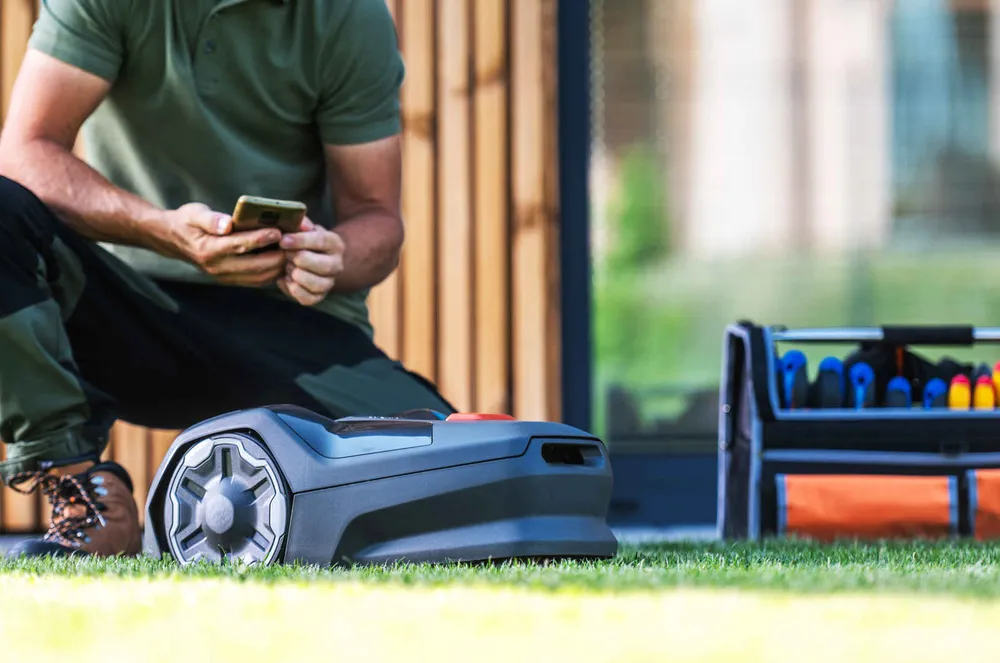
A small autonomous robotic lawn mower sitting on a flat, closely mown lawn beside a kneeling person looking at a phone, with a toolbag on the grass
The machine this section is about, and the picture is the argument: it is sitting on kept turf with nobody holding anything, which is the arrangement it is built for. Read the ground rather than the slope rating. If your bank looks like this once it is cut, the robot will keep it that way while you are indoors.

If your bank is a mown bank and you want it to stay mown, the robot is the better answer and it earns us nothing to say so. The buying guide for remote control mowers works through that distinction properly, including why the category stayed obscure in the United States.

What it costs after the purchase

The machine price is not the ownership cost, and the gap here is wider than in most categories. On the dearer machines a spare battery alone is a third of what the mower itself cost.

Part you may end up buying What the maker's own store asks
Spare battery, 18AhAround $1,300
Spare battery, 12AhAround $700
Replacement handsetAround $470
Fast chargerAround $350
Extended cover, one yearAround $400
Standard drive tyres, set of fourAround $200
Wide tyres, set of fourAround $500

Whichever wheels you buy, they carry only a thirty day warranty of their own.

The main warranty runs two years or two thousand hours on the machine, the remote and the battery, whichever comes first, while consumable parts, which the warranty page lists as blades, bumpers, tyres and springs, are covered for thirty days.

The genuinely good news in that list is that the parts exist as parts. We went through the manufacturer's own catalogue and blades, tyres, hubcaps, the mulch insert, the grass bag, the charger and even the screw pack are all sold separately, with blades starting under a hundred dollars.

A machine you can keep running with published parts is worth more than one you cannot, and this is the part of the ownership story that goes the buyer's way. The brand also lists repair locations in California and Missouri plus dealer service partners in other states, which is more than most direct to consumer hardware offers.

Owner reports do describe blade and fan adapter plates cracking on rock strikes, and that particular plate is not one of the parts on the published list. If your ground has stone in it, budget for that rather than assuming it away.

One upgrade is worth a warning, because it is the one owners reach for first. The high lift blade is sold as the fix for thick growth and it does cut better, but an owner who fitted one reports the machine overheating on heavy foliage and needing to stand and cool down.

That is on the reasoning that the blade now feeds the motor more than it was sized for. More cutting power through the same motor and the same battery is not free.

Five terms in the fine print, before you buy

Term What sets it off What to do before you order
The return charge Any return once the machine has shipped Treat the decision as final. The cost, the video and the photographs are all in item one below
The repack condition Any return once the machine has shipped, on a machine that weighs over a hundred pounds Repack it to the original size or overweight fees are added, and the shipping figure itself is unpublished. Get it in writing
The unboxing video Anything missing or damaged in transit Film the unboxing before you open the box, unedited, and report damage inside the stated windows
Earning money with it Commercial, professional agricultural, institutional or income generating use Read the second warranty column. It gives no period at all, only terms per contract
Where you bought it Buying through a third party rather than an authorised channel Confirm the seller is authorised, and keep the invoice: service needs proof of purchase
  1. What a return costs after it ships is no longer published. The policy we re-read on 27 August 2026 charges return shipping on returns made for customer reasons and names no fee. On a machine over a hundred pounds that is not a small number, and the return also requires a demonstration video plus photographs of the cleaned inner packaging and the sealed outer box.
  2. Thirty days is not the same as no questions asked. The return has to be evidenced before it is accepted: one video demonstrating that the machine does not meet expectations, one photograph of the cleaned inner packaging and one of the sealed outer box. A change of mind still has to be shown rather than simply declared.

    The brand's FAQ adds a term the policy page leaves out. Re-read on 27 August 2026, it asks you to pack the machine back to its original size to avoid overweight fees on top of the return shipping. That shipping figure is published nowhere, so ask support to confirm your return cost in writing before you order.

  3. Film the unboxing before you open the box. The warranty page requires an unedited unboxing video recorded before opening for free replacement of missing or damaged items, gives you seven days from signing for the goods to report damage, and asks for logistics damage to be reported within twenty four hours. Miss the video and a missing part becomes your problem.
  4. Using it to earn money takes it outside the two year warranty. The warranty table has two columns. The consumer one is the two years or two thousand hours quoted everywhere.

    The other column covers any commercial, professional agricultural, institutional or income generating use, and against every line in it the table says the terms are per specific contract rather than giving a period at all. If you mow other people's ground for payment, the cover you have read about is not the cover you would have.

  5. Where you buy it decides whether it is covered. The same page states that machines bought through unauthorised channels are not eligible for free warranty repair, and dates that policy to March 2024.

    This matters more than it sounds, because this machine is also sold through third party retailers. If you buy it somewhere other than the manufacturer, confirm first that the seller is an authorised channel, and keep the invoice, because the warranty requires proof of purchase before any service at all.

Frequently asked questions

What counts as a slope mower?

A slope mower is any mower designed to work on ground too steep to sit on safely, which in practice means three different machines: a remote control mower the operator drives from level ground, a walk behind brush mower the operator pushes from the uphill side, and a tracked machine that spreads its weight over crawler belts. They are not interchangeable, because they fail in different places.

How steep is a 45 percent slope in degrees?

About 24 degrees. Percent grade is rise divided by run multiplied by 100, and degrees are the angle itself, so the two numbers never match: 45 percent is 24 degrees, 75 percent is 37 degrees, 85 percent is 40 degrees, and 119 percent is 50 degrees.

A 100 percent grade is 45 degrees, not vertical, which is the point where most people realise the two scales have been telling them different things.

Can a remote control mower replace a riding mower?

On a normal flat lawn it is the wrong tool and slower, because you walk the whole time you are mowing. It replaces a riding mower on the part of a property a riding mower should not be on at all, which for most owners is a bank, a ditch side or an embankment rather than the whole yard.

Is the steepest rated model always the most expensive?

In this line it is now, but it was not in July, which is the useful thing to know. The grip tread edition rated to 119 percent used to be listed below the wide wheel edition rated to 85 percent, because the wide wheel version is built for width and flotation on soft ground rather than for angle.

Our August check found the ladder had aligned. Buy for the job rather than for the biggest number, and read the price rather than inferring capability from it.

What does it cost to send one back?

The published policy no longer names a flat fee. Re-read on 27 August 2026, it gives you thirty days from delivery, charges return shipping on returns made for customer reasons, and requires one video showing the machine failing to meet expectations plus two photographs of the packing.

Mowrator told us directly that the actual return shipping cost is all a customer pays, and the brand's own FAQ pages now agree: the flat fee they used to publish is gone as of 27 August 2026.

The FAQ does add a term the policy leaves out, which is that the machine has to be packed back to its original size or overweight fees are added. The figure itself is still unpublished, so get the cost of your return in writing before you order.